Updated November 2026. We rewrote this guide around the signs that tell you it is time to replace windows in a Connecticut home, and added current information on rebates, timing and financing.
Windows rarely fail all at once. They get a little draftier each winter, a little harder to open, and a little foggier between the panes. Because the change is slow, many homeowners only notice it when the heating bill arrives or a sash finally sticks shut.
Getting ready for winter? Use our checklist to prepare your windows for a Connecticut winter.
This guide will help you decide whether your windows need repair, a little maintenance or full replacement, and how to plan the project around Connecticut weather and your budget.
Why Connecticut winters are hard on windows
Connecticut homes go through long heating seasons, freezing nights, wind-driven rain and snow, and humid summers. Each season works on your windows in a different way:
- Cold and wind find every gap around a worn sash or frame. A small leak that goes unnoticed in May becomes a cold draft in January.
- Freeze-thaw cycles push water into cracks in wood sills, failed caulk and loose glazing, then expand as ice. Over time this opens the gaps wider and can lead to rot.
- Indoor humidity from cooking, showers and people meets cold glass in winter. When glass is cold enough, moisture condenses on it and can damage sills and trim.
- Summer sun fades finishes and furnishings and can heat up rooms with older clear glass.
That is why a window that seemed fine for years can suddenly feel like a problem after one hard winter.
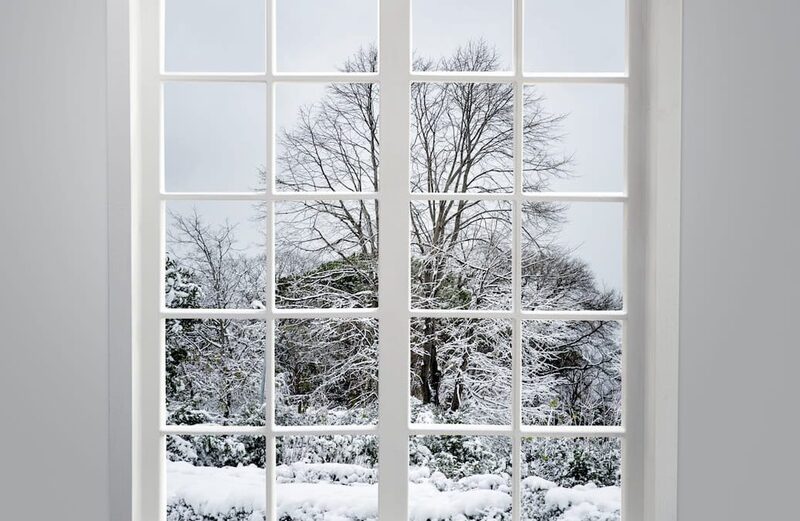
Signs it is time to replace your windows: a checklist
Walk through your home and check each window. The more boxes you tick, the stronger the case for replacement.
- Drafts you can feel. Hold the back of your hand near the sash and frame on a windy day. Moving air means the window or its seal around the frame is leaking.
- Fog or moisture between the panes. On double- or triple-pane windows, condensation trapped between the glass usually means the seal has failed. The glass unit has lost its insulating performance and cannot be fixed by cleaning.
- Heavy condensation or ice on the inside of the glass. Some winter condensation is normal, but frequent water running down to the sill points to cold glass and possible air leaks. Read more about why windows sweat and what to do about it.
- Windows that stick, will not stay open or will not lock. Worn balances, warped sashes and broken hardware are a comfort, safety and security problem.
- Soft, rotted or cracked frames and sills. Press gently on wood sills with a screwdriver. Soft spots mean water damage that can spread into the wall.
- Single-pane glass. Single-pane windows lose far more heat than modern insulated glass, especially in a Connecticut winter.
- Rising heating and cooling bills without another clear cause, such as a change in rates or an aging furnace.
- Outside noise from traffic or neighbors that seems louder than it should be.
- Faded floors, rugs and furniture near windows with older clear glass.
One sign on one window may only need a repair. Several signs across the house usually mean the windows have reached the end of their useful life.
Repair or replace?
Not every problem calls for new windows. A simple way to decide:
| What you notice | Often repairable | Usually time to replace |
|---|---|---|
| Draft at one window | New weatherstripping or caulk | Drafts at many windows, or gaps from a warped sash |
| Window is hard to open | Cleaning, adjustment or new hardware | Warped or swollen frame, broken balances on older units |
| Fog between panes | Sometimes a glass unit replacement on a newer window | Failed seals on several windows of the same age |
| Damaged wood | Small, surface-level damage | Soft, rotted sills or frames |
| Single-pane glass | Storm windows can help in some homes | You want lower bills, less noise and easier cleaning long term |
If a stuck sash is your only problem, our guide on what to do when a window won’t open or close is a good place to start.
Older Connecticut homes: one extra thing to know
Many Connecticut houses were built before 1978. In those homes, window work can disturb old painted surfaces. Under the EPA Lead Renovation, Repair and Painting Program, contractors paid to disturb painted surfaces in pre-1978 homes must be EPA-certified firms that use lead-safe work practices. Ask about this when you collect estimates.
What does replacement cost, and how can you pay for it?
Cost depends on the number of windows, their size and style, the frame material, the glass package and whether the opening needs repairs. For a detailed breakdown by window type, read How Much Does Window Replacement Cost in Connecticut?
Two things can help with the budget in 2026:
- Energize Connecticut rebate. Eversource and United Illuminating residential customers can get $100 per window for ENERGY STAR certified triple-pane replacement windows with a U-factor of 0.20 or lower (0.21 or lower with grids) that replace single-pane, single-pane with storm, or double-pane windows. The windows must be installed by a contractor in an existing home between January 1 and December 31, 2026, and the application must be postmarked by February 27, 2027. It cannot be combined with other utility rebates. Details are on the Energize Connecticut website and in our 2026 window rebate guide.
- Financing. If replacing several windows at once is a stretch, our financing options can spread the cost over time.
Please note that the federal Energy Efficient Home Improvement Credit (25C) no longer applies to new windows. According to the IRS, it ended for property placed in service after December 31, 2025.
Is there a best time of year to replace windows?
Windows can be replaced in any season. Each has trade-offs:
- Spring and summer: mild or warm weather and long days. These are popular months, so plan ahead.
- Fall: a good time to get ready for winter before the heating season starts.
- Winter: possible with careful planning. Ask your installer how they keep each opening closed up and your home warm during the work.
The more important question is how long you want to keep living with drafty, failing windows. Every winter with poor windows means another season of higher heating costs and less comfort. If you want this year’s Energize Connecticut rebate, keep in mind that installation must be completed by December 31, 2026.
How Superior Windowland can help
Superior Windowland is a licensed and insured Connecticut home improvement contractor (HIC.0639277), BBB Accredited since 2014. Our own crews handle professional window installation, and we can help you compare window styles, materials and glass options for your home.
We replace windows for homeowners across Connecticut, including Newtown, Danbury, Southbury and Fairfield.
Get a free in-home estimate
Not sure whether your windows need repair or replacement? Book a free, no-pressure in-home consultation. We will look at your windows, answer your questions and give you a free estimate.
Call (203) 479-9703, contact us online, or visit our showroom in Newtown to see window options in person.